Current Theme: mobile
Profile: N/A
Account: [N/A]
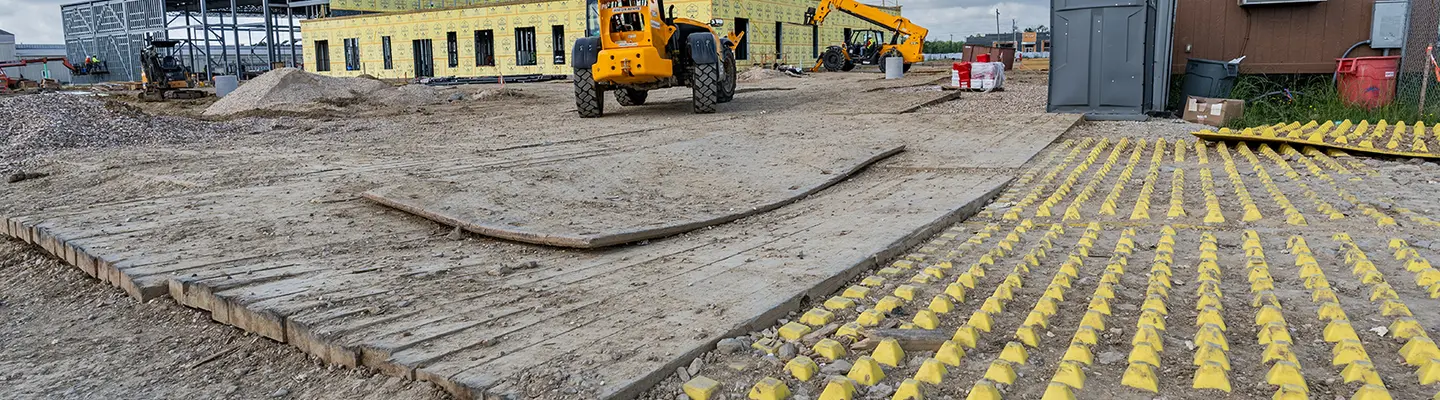
How long do ground protection mats last? The answer depends largely on how they are used and maintained.
Ground protection mat lifespans depend on the type of mat and how it’s used, maintained and stored. High grade mats can often perform for many years when properly used and cared for.
This article outlines the typical lifespans for common mat types, provides maintenance tips and explains why renting mats can be a smart alternative to owning them.
Several considerations influence how long mats last, according to the United Rentals matting team.
“By far, the most crucial factor in the lifespan of mats is how they are handled when they are being unloaded from the trucks and placed on the ground,” said Jared Shuler, Director Region Sales & Marketing, Matting for United Rentals. “We've seen people push them off the sides of the truck and watch them bounce on the ground, then flip them over and let them bounce on the ground again.”
The best way to extend the life of ground protection mats is to follow the manufacturer’s instructions for proper handling.
HDPE/composite mats and timber mats are designed for repeated use and typically last longer than plywood alternatives. Light-duty timber mats, which contour to the ground to avoid damage under pressure, are made with pine in the middle and may have a shorter lifespan than heavy-duty hardwood timber mats.
Mats can be damaged when the mat and the project are mismatched. For example, “if a heavy-duty track dozer is running and turning on top of 3-ply mats, the mats may sustain structural damage,” said Shuler.
“In the pipeline space, if you have B Grade mats or older mats under extremely heavy pipe, such as 48” pipe or concrete coated pipe, the weight may cause the mats to break down,” Shuler added.
Some ground conditions contribute to faster mat wear. Mats are subject to more stress when placed over soft, saturated, rutted or rocky ground.
Extended sun exposure, freeze-thaw cycles, standing water and chemicals such as diesel and oils can degrade plastics and accelerate rot or corrosion in other materials. Mats with coated ends are designed to resist rot.
The ranges below reflect typical lifespans when mats are used under ordinary conditions and maintained properly. Actual service life will vary.
Typical Lifespans by Mat Type | ||
|---|---|---|
Mat type | Typical Use | Approximate lifespan |
HDPE/composite mats | Vehicle/crew access over turf, soft soils, event grounds | Roughly 7–13 years, with well-maintained mats used under lighter loads often lasting a decade or more |
Heavy-duty timber and crane mats | Temporary roads, crane pads, pipeline ROWs, staging yards | Roughly 1–5 years, potentially longer under moderate traffic and with proper storage and handling |
Lightweight turf protection panels | Pedestrian paths, light vehicle access on grass and landscaping | Multiple seasons to several years, depending on traffic and storage |
A simple maintenance routine can extend ground protection mat lifespans and help you avoid issues in the field. Steps may include the ones below, but check the manufacturer’s maintenance recommendations for the mats you’re using.
Spotting wear early allows you to reserve worn mats for lighter duty or remove them from service. Common red flags include:
When in doubt, downgrade worn mats to lighter applications or remove them from service and work with a matting specialist to determine the best replacement strategy.
Deciding whether to rent or own mats often comes down to how frequently you use them and your in-house capacity to inspect, maintain, store and replace them. It’s also a question of how much capital you want to devote to ground protection matting.
Renting mats shifts ownership burdens to the rental provider. When you rent from United Rentals, mats arrive clean, inspected and ready for use. United Rentals’ extensive inventory of different mat types and mats from multiple manufacturers allows you to rent exactly the right mats for the project and site conditions rather than being forced to make do with what you have on hand. Using the best mats for the application can improve safety, sustainability and productivity.
With a rental approach, there’s no need to spend capital upfront or pay for storage space. Once the project wraps, United Rentals handles mat retrieval.
If you’d like to offload the burden of creating access roads, laydown yards and work pads, United Rentals can function as your turnkey partner. Services include land clearing, site development, mat installation and removal and site restoration.