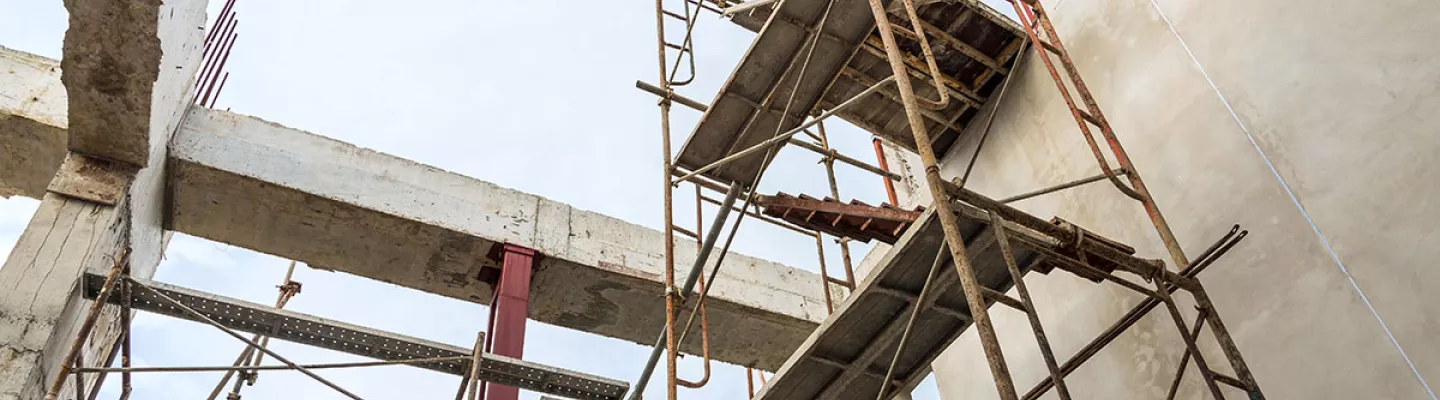
How to Choose the Right Scaffold for the Job

Choosing the Right Scaffolding for the Job: From Frame Systems to Pump Jack Scaffolding Rentals

When scaffolding is set up correctly, it provides workers with safe access to both single-story and multilevel building exteriors and interiors.

Article Updated on: October 02, 2026

Scaffolding used in construction gives crews access to an elevated work area, often the exterior of a building. There are several types of these temporary structures to choose from. One of the first things a contractor should consider when setting up a scaffold is the building's design and the kind of work that will be performed.


What is scaffolding?

Scaffolding is a temporary work platform that supports workers, tools and materials during the construction or maintenance of buildings or other structures. They provide workers with a safe, stable platform to reach elevated areas and can hold tools and supplies close to the work area for easy access.


Scaffolding types

Different types of scaffolding can be used for the same type of work, so the choice often comes down to budget, the available space around the building and how long the work will take. The most frequently used types are supported scaffolding and suspended scaffolding.

Scaffolding Type

Category

Use Case

Space Requirements

Load Capacity

Mobility

Frame scaffolding

Supported

Long-term projects (painting, stucco, multi-worker jobs)

Considerable space around the building

Supports multiple workers and equipment

Stationary

Ladder jack scaffolding

Supported

Light maintenance or touch-up work at ladder height

Minimal space, attaches directly to ladders

Not designed for multiple workers or heavy equipment

Stationary

Pump jack scaffolding

Supported

Small siding and painting jobs requiring variable work heights

Minimal footprint along vertical poles

Adjustable to task, best for lighter loads

Height-adjustable, not wheeled

Mobile/ rolling scaffolding

Supported

Exterior and interior finish work needing horizontal access

Requires an even surface to roll safely

Varies by configuration

Moves easily on castors

Suspended scaffolding

Suspended

Upper floors, tall buildings, window washing and repair

No ground footprint (hangs from overhead supports)

Platform-rated, motor-raised

Raised and lowered vertically

Supported scaffolding: The most common type of scaffolding

Supported scaffolding is a network of poles or other members supporting horizontal platforms. These scaffolds consist of platforms that are supported by rigid structural supports such as outrigger beams, legs, poles or frames. The supports usually can be beefed up to accommodate the added weight of additional equipment and workers if necessary. Some standard supported scaffolding types are:

  • Frame scaffolding: Frame scaffolding is stationary and built from the ground up. It's a popular and relatively inexpensive option for a long-term project. It's used in a variety of trades, including painting and stucco. It can support multiple workers and equipment. Frame scaffolds require a considerable amount of space around the building, so they are not always an option for limited-access spots.
  • Ladder jack scaffolding: A ladder jack scaffold is constructed using two metal devices that attach to two ladders to create a stable base for a platform. This is a quick and easy solution, but it’s suitable only for light jobs like maintenance or touch-up at no more than ladder height. It is not designed to support multiple crew members or heavy equipment.
  • Pump jack scaffolding: A pump jack scaffold is supported by moveable brackets on vertical poles. It’s easily adjusted, like a car jack, and works well for small siding and painting jobs and any other task that requires work at variable heights.
  • Mobile/rolling scaffolding: Mobile scaffolding, also known as rolling scaffolding, is set on castors, so it can be moved easily to another section of work, assuming you have an even surface. It’s ideal for work on exterior and interior finishes, where contractors need extended horizontal access along the surface.

Suspended scaffolding: Good for upper floors and tall buildings

A suspended scaffold, also known as a hanging scaffold, consists of a platform with a guardrail system that can be raised up and down by ropes connected to an electric motor positioned on the roof.

Suspended scaffolding is a good choice when work is located at the exterior upper floors of a building or when the building is so tall that erecting frame scaffolding is not practical. Window washing, repair and other maintenance contractors use suspended scaffolding.

OSHA requirements for scaffolding

No matter the type of scaffolding, contractors should follow all the safety rules and OSHA guidelines for assembly, use and tear-down. OSHA provides a guide for the proper use of scaffolding in the construction industry.


Frequently asked questions

What is the most common type of scaffolding?

Supported scaffolding is the most common type used on construction jobsites. It relies on rigid structural supports, such as frames, poles or outrigger beams, to hold platforms in place. Frame scaffolding, ladder jack scaffolding, pump jack scaffolding and mobile scaffolding all fall under this category.

What is pump jack scaffolding used for?

Pump jack scaffolding supports small siding and painting jobs and other tasks that require work at variable heights. This type of scaffolding has moveable brackets on vertical poles that allow workers to adjust the platform height as the job progresses, similar to a car jack.

When should contractors use suspended scaffolding instead of supported scaffolding?

Contractors should use suspended scaffolding when work sits high on a building's exterior or when the structure is too tall for a supported scaffold to be practical. Because suspended platforms hang from overhead supports rather than building up from the ground, they require no ground-level footprint. Window washing, upper-floor repair and other maintenance work are common use cases for suspended scaffolding.

Does OSHA regulate scaffolding on construction sites?

Yes, OSHA requires contractors to follow safety rules for scaffolding assembly, use and tear-down regardless of the type selected. A competent person should oversee setup and confirm the scaffold meets OSHA guidelines before workers access the platform.

Visit our online marketplace to browse our aerial work platforms.

Current Theme: mobile
Profile: N/A
Account: []