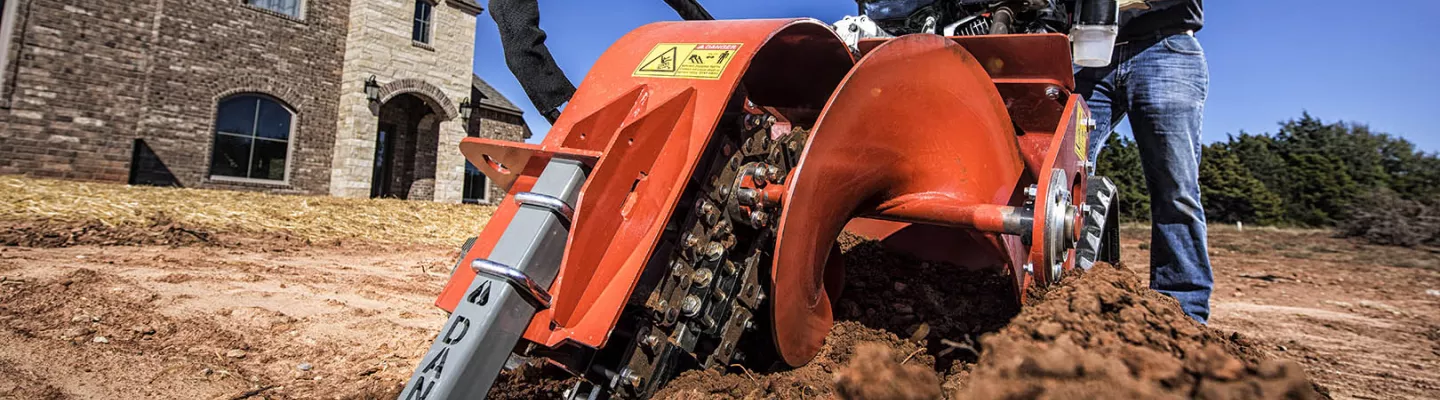
Ditch Witch Walk Behind Trencher

How to Use a Walk-Behind Trencher

Learning how to use a walk-behind trencher to make narrow, precise cuts in the earth will speed up projects and spare your back.

Article Updated on: September 24, 2026

Digging by hand is no fun. That’s especially true when you’re doing landscaping tasks such as edging, or you’re digging a trench to bury cable, install irrigation piping or put in a pet fence. Once you learn how to use a walk-behind trencher, aka a landscape trencher or manual trencher, you can create narrow, relatively shallow trenches with less effort and more precision.


What is a walk-behind trencher?

A walk-behind trencher, also known as a landscape trencher or manual trencher, is a compact, motorized earthmoving machine that uses a rotating chain or wheel to cut through soil, asphalt or concrete. Trenchers cut narrow, shallow trenches for landscaping, irrigation or cable and fence installation projects. Unlike a ride-on trencher, a walk-behind trencher is maneuverable in tight spaces and controlled by the operator walking it backward.


Read on to discover how to use these small trenchers and what tasks they can handle.

Walk-behind trenchers vs. ride-on trenchers

While both walk-behind trenchers and ride-on trenchers dig precise trenches for landscaping or utility installation projects, they have different features and use cases. Choosing the right trencher for your project comes down to trench size, jobsite space and project scope.

Feature

Walk-Behind Trencher

Ride-On Trencher

Maneuverability

Highly maneuverable in tight spaces

Better suited for open, wide jobsites

Trench depth/width

Narrow, shallow trenches up to 3 feet deep

Wider, deeper trenches up to 6 feet deep

Best use cases

Landscaping, irrigation lines, pet fences and cable laying

Large-scale utility or drainage projects

Operator experience

Efficient for single operators with minimal training

Requires operator familiarity with hydraulic controls

Ideal jobsite

Residential yards or tight urban lots

Commercial sites or open acreage

Before you dig

First and most important: Call 811, the “call before you dig” phone number, or visit your state’s “call before you dig” website at least a few business days before you dig. Why? To learn whether there are buried utilities in your dig area and have them marked with paint or flags so you don’t hit them. Hitting an underground utility line could lead to electric shock, an explosion, or damage or injury from the release of high-pressure water.

How to use a walk-behind trencher: The basics

Every trencher model is different. Read the operator’s manual to learn how to use your specific trencher model. The main steps are outlined in broad strokes below. Don’t forget to wear PPE. You’ll want work boots, safety glasses, gloves and a hard hat.

  1. Inspect the machine. Make sure the guards and shields are in place, the chain is tight and the teeth are in good condition. Check the fluids, too.
  2. Clear the path. You’ll be walking backwards when you operate the trencher and won’t be able to see what’s behind you, so this step is important. You don’t want to trip on a garden hose, tool or child’s toy. Running over obstacles could also damage the machine, as well as whatever object you run over. Remember to remove any landscaping fabric. Keep other people away from the immediate area.
  3. Move the machine to the trench starting point. Start the machine by following the instructions in the manual. Set the drive position to forward, then move the trencher where you want it.
  4. Change the drive position to reverse. Although the machine is called a walk-behind trencher, it’s designed to dig earth with you pulling the machine toward you as you walk backwards. Think of it as the opposite of pushing a lawn mower.
  5. Set the chain depth. Set the chain to the depth you want, then lower it to just above the ground. Activate the chain and lower it into the earth. Change the depth if necessary, then throttle up.
  6. Walk backwards, pulling the trencher toward you. Keep both hands on the handles and maintain situational awareness.

Tips for using a walk-behind trencher

Got the basics figured out? Here are a few more points to consider as you continue learning how to use a walk-behind trencher:

  • Choose the right size machine for the job. Walk-behind trenchers are more compact and maneuverable than ride-on trenchers, but if you’re renting a walk-behind trencher, you’ll still want to determine what size and horsepower you need for the trench you’re digging. A wider, deeper trench will require a larger trencher, while a small trencher is used for shallow, narrow trenches.
  • Choose the right chain teeth and attachments. Rocky ground presents challenges. In cases of extremely rocky earth or sediment, using a trencher with the wrong teeth or attachments can damage the machine or get it stuck. Know the ground you’re digging in. If you’re not sure what trencher teeth or attachments you need, ask your rental equipment provider.
  • If you get stuck in hard or muddy earth, reverse the chain or wheel. Follow the procedure recommended in the manual. Switching between forward and reverse, as you would with a car stuck in the mud, can often dislodge the attachment.
  • Soften hard earth. If the ground is giving you trouble as you attempt to dig, moisten the earth with a hose to make it easier for the trencher to cut through.

More walk-behind trencher uses

A walk-behind trencher can help with many jobs that are too sweat-inducing to carry out by hand and require holes that are narrower and shallower than those a ride-on trencher cuts. In addition to making cuts for landscaping or installing cable, piping or fences, a walk-behind trencher can be useful for the following tasks.

Cutting trenches in asphalt or concrete

With diamond-tipped blades and a wheel-shaped head, a small walk-behind trencher can cut through hard materials such as asphalt. This leads the way to easier cable-laying, landscape modification and more. If you plan to cut asphalt with a rented trencher, ask the sales associate what attachments you’ll need to achieve your goal safely and efficiently.

Cutting and removing roots

A walk-behind trencher can chunk up roots, including ones that would be extremely difficult to deal with using hand tools. Because lawn trenchers slowly put a great deal of pressure on the surface beneath, they efficiently bust up shallow root systems, making them easier to get out of the ground.

Choose a walk-behind trencher with United Rentals

Walk-behind trenchers are handy, versatile machines for tackling a variety of landscaping and jobsite tasks. Once you choose the right trencher machine and learn how to use it, you’ll be digging small trenches or making cuts in roots, concrete or asphalt with ease.


Frequently asked questions

How deep can a walk-behind trencher dig?

Most walk-behind trenchers can dig trenches up to 3 feet deep, depending on the model and chain length. Confirm depth specifications with your rental equipment provider before beginning your project.

What is the difference between a walk-behind trencher and a ride-on trencher?

A walk-behind trencher is smaller, more maneuverable and built for narrow, shallow trenches in tight spaces. A ride-on trencher handles wider, deeper cuts across larger jobsites.

Can a walk-behind trencher cut through asphalt or concrete?

Yes, a walk-behind trencher can cut through asphalt or concrete. With the right diamond-tipped blade attachment, a walk-behind trencher can cut through asphalt and concrete for cable-laying or landscape modification projects.

What attachments does a walk-behind trencher need for rocky ground?

Rocky or sediment-heavy ground requires specific chain teeth and attachments to prevent machine damage or getting stuck. Ask your rental equipment provider to match the right attachment to your ground conditions.

Visit our online marketplace to browse our selection of trenchers for rent.

Current Theme: mobile
Profile: N/A
Account: []