Current Theme: mobile
Profile: N/A
Account: [N/A]
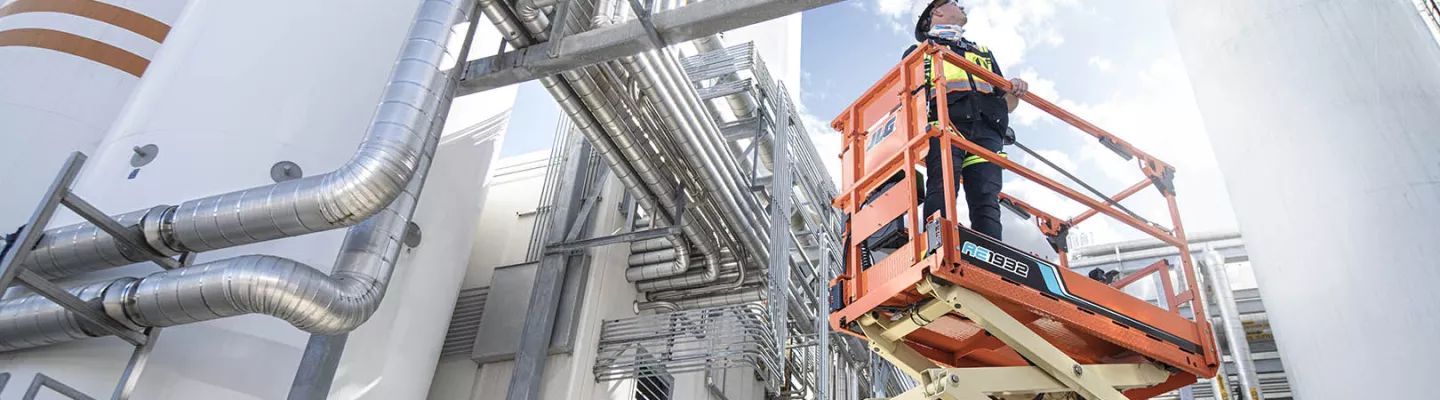
A guide to scissor lift types, sizes and weight capacities to help your team pick the right machine for the job.
Article Updated on: October 05, 2026
Scissor lifts are indispensable on many jobsites. These machines use steel legs arranged in stacked X patterns to lift and lower a work platform that brings workers and materials to high places. There’s an array of sizes and types of scissor lifts, from small electric models for compact indoor spaces to tall rough terrain lifts with more horsepower and the ability to traverse slopes, uneven terrain and mud.
To choose the best scissor lift for your application, understand the types and sizes available.
Scissor lift types differ by power source, weight limit and the environments they can handle. Which type is the best? The answer depends on how you plan to use it.
Type | Power Source | Best Environment | Weight Capacity | Notable Features |
|---|---|---|---|---|
Electric | Battery | Indoor, smooth surfaces | 500 to 1,000 lbs | Silent, emissions-free, compact |
Diesel | Diesel fuel | Outdoor | Up to 1,500 lbs | Higher speed, larger platforms |
Rough Terrain | Diesel, gas or electric | Outdoor, uneven terrain | Up to 1,500 lbs | Heavy-duty tires, available 4WD |
Hydraulic | Electric motor or air compressor | Indoor, warehouses, shops | 1,000 to 50,000 lbs | Some models permanently anchored |
Pneumatic | Compressed air | Indoor, low-ventilation areas | 1,000 to 10,000 lbs | No fumes, no electricity required |
Electric scissor lifts are powered by batteries and are more compact than other lifts. They can fit through doorways and other access points and are easier to store. These lifts are used on smooth surfaces for construction, industrial maintenance and warehouse applications. Silent, emissions-free operation makes them ideal for indoor use, though they can sometimes be used outdoors, too.
Electric scissor lifts typically have a lower weight capacity than gas or diesel-powered lifts. They are available with narrow or wide platforms to suit a variety of tasks. Load limits range from 500 pounds to 1,000 pounds.
Diesel scissor lifts can handle more weight than other scissor lifts and travel at greater speeds. In addition, they offer larger work platforms. The tradeoff: noise and emissions. They’re typically used outdoors.
The smallest diesel lift features a lift height of 25 feet with a load capacity of 1,500 pounds. A 70-foot model can lift as much as 1,200 pounds, which makes them better suited for elevated construction projects and tall building maintenance.
Rough terrain scissor lifts are fitted with heavy-duty tires. Some offer four-wheel drive and positive traction control to better handle difficult and uneven terrain. Most are powered by diesel or gas, but electric rough terrain models are now available.
Rough terrain lifts generally have higher weight capacities than traditional slab electric lifts and can reach greater heights. Load capacities max out around 1,500 pounds, with lift heights starting at 25 feet for electric lifts and as much as 70 feet for diesel lifts.
Hydraulic scissor lifts are small, lightweight machines commonly found on construction sites and in warehouses. They are easy to operate but offer less speed and horsepower than diesel lifts. Some are mobile but others are permanently anchored, such as those found in auto repair shops.
Hydraulic lifts are powered by an electric motor or an industrial air compressor that pressurizes hydraulic cylinders that raise the platform. The smallest hydraulic lift has a weight capacity of 1,000 pounds. Larger models can lift up to 50,000 pounds and can be fitted with wide, 8-by-20-foot platforms.
They are not suitable in environments prone to fire and explosions or places where hydraulic fluid could contaminate sensitive equipment.
A pneumatic scissor lift uses an external motor to compress and pressurize air, which pushes the cylinder(s) attached to the scissor legs. Because these lifts emit no fumes, they are a good fit for indoor jobsites and those with poor ventilation. They are ideal in areas where electricity is not available.
Pneumatic lifts are quiet, energy-efficient and easy to maintain. Lift capacity starts at approximately 1,000 pounds. The largest models can lift as much as 10,000 pounds.
The scissor lift size you need depends on the height you want to reach and the weight you want to lift.
Lift heights start at 10 feet for the smallest electric models. At the other end of the size spectrum are diesel-powered lifts that can reach as high as 70 feet.
Scissor lift weight capacity can vary widely. Large scissor lifts can lift more.
Platform size is another consideration. Wide platforms offer better access and require less repositioning as the job progresses, but of course they take up more space. Powered deck extensions, available on some models, give workers more forward horizontal reach.
Below are some common scissor lift sizes and typical applications for each.
These small, compact lifts are light-duty machines with narrow platforms. They can maneuver around warehouses and busy construction sites and can lift approximately 500 pounds.
Highly popular, 19-foot scissor lifts are ideal for accessing ceilings and ductwork inside buildings with 10-foot ceilings. Some are narrow enough to maneuver through tight spaces, including standard doorways.
For washing and repairing windows, 25-foot scissor lifts are go-to aerial lifts. Models equipped with a wide platform can lift heavy equipment up to 1,000 pounds to the height of a three-story building.
30-foot scissor lifts can position operators at extended heights for long periods and are popular for work around power lines and poles. They are also handy for maintenance jobs.
The largest of all the scissor lifts, 50 to 70-foot scissor lifts are used to reach tall treetops, sixth-floor building exteriors and high utility work. Many models in this size range are designed for rough terrain, with options such as heavy-duty four-wheel drive for safer operation outdoors.
With all the different types and sizes of scissor lifts as well as the optional features available, choosing exactly the right lift for an application can feel challenging. Contact a United Rentals representative for more information about our aerial work platforms.